RAAC surveys. Know where it is, how safe it is and what comes next.
Roofcheck provides RAAC surveys for schools, hospitals, offices and commercial buildings across the UK, for facilities managers, property owners, managing agents and estates teams who need to know whether RAAC is present and how serious the risk is. Every panel is identified, mapped and assessed for cracking, deflection, bearing and water damage, following the Institution of Structural Engineers’ guidance.
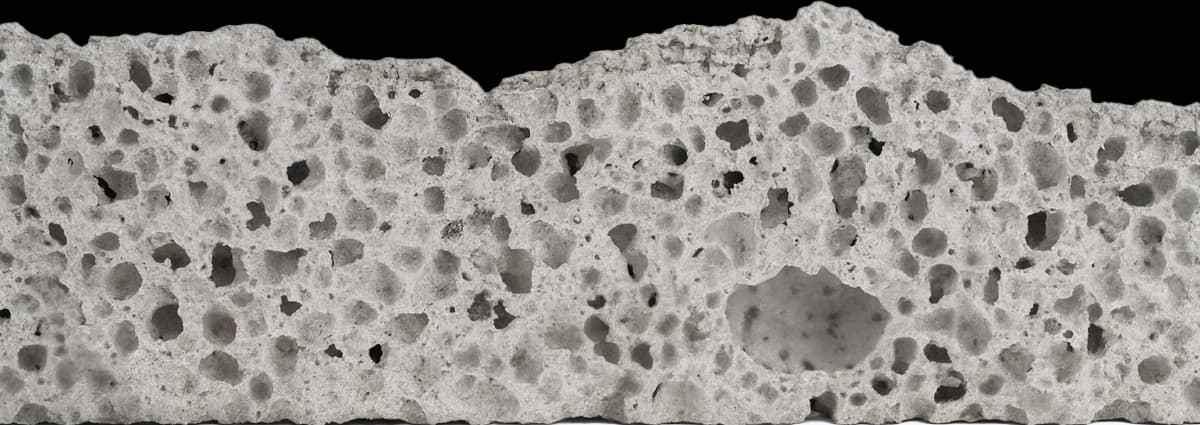
RAAC surveys for schools, hospitals and commercial buildings
Reinforced autoclaved aerated concrete was used in UK buildings from the late 1950s to the 1990s, most often as panels in flat roofs. Its main risk is sudden failure, especially where panels are wet, cracked or poorly supported.
There is no central register of buildings with RAAC, so the only way to know is to inspect. A survey confirms where it is, assesses every panel and sets a risk rating that tells you what to do next.
Schools and colleges
Checks flat-roofed buildings from the late 1950s to the 1990s, when RAAC was most often used.
Hospitals and public estates
Identifies RAAC across an estate and shows which panels need action first.
Before any roofing work
New roof layers can add weight and hide defects, so a RAAC roof is assessed before it is re-roofed or overlaid.
Leaks on a RAAC roof
Water weakens RAAC and raises its risk rating, so a leak on a RAAC roof needs prompt investigation.
Monitoring panels that stay
Panels left in place are re-inspected to check they have not deteriorated.
Planning remediation
A risk rating for every panel gives a basis for budgeting and phasing repairs or replacement.
What a RAAC survey covers
Every panel identified, assessed and given a risk rating.
What it covers
- Where RAAC is present, mapped panel by panel on a plan
- Cracking, especially near the panel supports
- Deflection and sagging
- How well each panel is supported at its ends
- Water ingress, staining and corroded reinforcement
- Alterations such as cut panels and added loads
- A risk rating and next steps for every panel
Limitations
- Panels hidden above ceilings or behind finishes may need opening up before they can be assessed
- The survey identifies and assesses RAAC. Any strengthening or replacement is designed separately by a structural engineer
- A risk rating reflects the condition on the day, so panels left in place need re-inspecting
How a RAAC survey works
Desk review
Drawings, the age of the building, earlier reports and any known leaks are reviewed to plan the inspection.
Identification
Panels are inspected, mainly from inside the building, to confirm where RAAC is present.
Condition assessment
Each panel is checked for cracking, deflection, bearing, water damage and alterations.
Risk rating and report
Each panel is given a risk rating with next steps, online and as a PDF.
Manage your RAAC surveys online
Approve quotes, follow every survey and open reports in one place, then share them by link so everyone works from the same information.
- Zone A
- High risk: cracking near supports, restrict access
- Zone B
- Medium risk: deflection and staining, monitor
- Zone C
- Low risk: dry and sound, re-inspect
A report you can act on
Every panel is mapped, assessed and given a risk rating, with clear next steps.
- Every RAAC panel identified and mapped on a plan
- The condition of each panel: cracking, deflection, bearing and water damage
- A risk rating for each panel, following IStructE guidance
- Recommended next steps, including any immediate measures
- Online and as a PDF
Monitoring RAAC that stays in place
Where the engineer’s assessment allows panels to remain in place under a management plan, Roofcheck can supply and install sensors on them. They record movement, cracking, moisture and temperature at the panel, and the readings reach your team however you want them: on a dashboard, by email or text alert, or straight into your building management system through an API or webhooks.
Questions about RAAC surveys
What is RAAC?
Reinforced autoclaved aerated concrete, a lightweight precast concrete used in UK buildings from the late 1950s to the 1990s, most often as panels in flat roofs.
Why is RAAC a concern?
Its main risk is sudden failure. Water getting in adds weight, weakens the material and corrodes the reinforcement, and panels that sag, crack near their supports or sit on short bearings are at greater risk.
How do I know if my building has RAAC?
There is no central register of buildings with RAAC, so it has to be identified by inspection, usually from the underside of the panels inside the building.
Who carries out the assessment?
The findings are assessed by a structural engineer, following the Institution of Structural Engineers’ guidance on RAAC.
What do the risk ratings mean?
Panels at the highest risk need urgent measures, such as propping, exclusion zones or taking a space out of use. Panels at lower risk are managed and re-inspected to check they have not deteriorated.
Does a high risk rating mean closing the building?
Not necessarily. The rating sets out what needs to happen, from restricting access to part of a space to propping, and the decision rests with the owner and their engineer.
Can a RAAC roof be re-roofed?
Only once it has been assessed. New layers can add weight and hide defects, so the build-up and loads are checked first, and some RAAC roofs need strengthening or replacing instead.
Is the survey intrusive?
It is mainly a close visual inspection of the underside of the panels. Where panels are hidden above ceilings or behind finishes, some opening up may be needed, which is agreed with you first.
What is needed from the client?
Access to every room below the roof, any drawings, the age of the building, earlier reports and details of any leaks.
How much does a RAAC survey cost?
Cost depends on the size of the building, the number of spaces and how much of the underside can be seen. Call 0113 868 0097 or start a quote online, and you’ll receive a written quote.
Get a RAAC survey
Whether you’re investigating a problem or planning ahead, we’ll help you choose the right survey for your roof. Get in touch for a free quote.
Free quote
A few details about the building and what you need to find out. It commits you to nothing.
Start your quote